Engineering guide
Worm Gear Materials Guide
Steel worms, bronze wheels, stainless concepts, cast iron and engineering polymers for custom worm gear RFQs and design review.
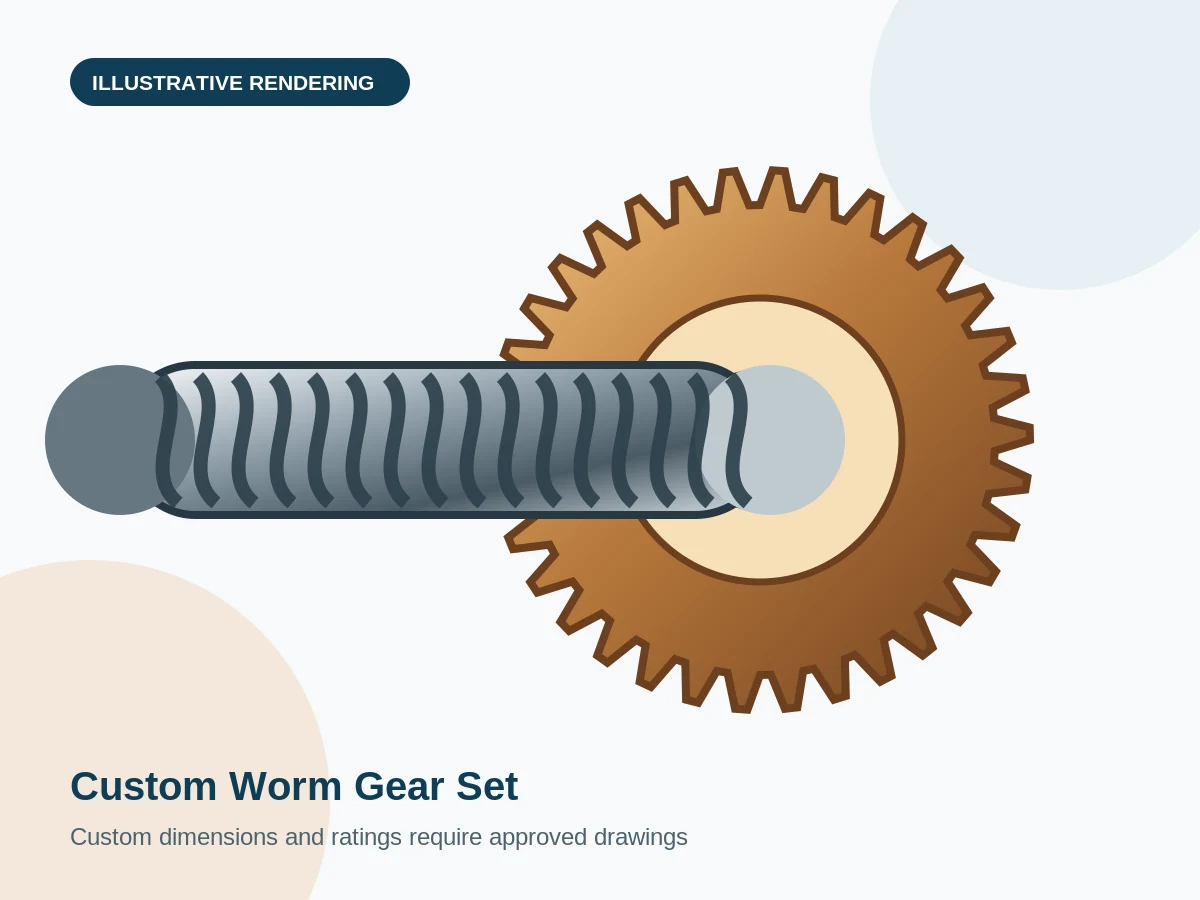
Steel worms, bronze wheels, stainless concepts, cast iron and engineering polymers for custom worm gear RFQs and design review.
Common concepts include carbon or alloy steels, with cut, induction-hardened, carburized or ground tooth options according to the drawing.
Aluminum bronze and phosphor bronze are common references for sliding contact, but the grade must be selected for load, speed, lubrication and environment.
Corrosion resistance can be useful in wet or washdown service, but galling, strength and mating-material compatibility require review.
These can serve light-load, cost-sensitive or low-lubrication roles in suitable conditions; they are not universal substitutes for bronze.
The tooth material, hub material and shaft connection may be different. Rim-to-hub torque transfer and machining allowance must be defined.
Specify material standard, condition, heat treatment, hardness, case depth, test reports and traceability on the order.
General context derived from connected worm gear catalogues and current official standards information. Product-specific values must be calculated for the actual design.