Engineering guide
How to Specify a Custom Worm Gear Set
A complete RFQ connects tooth geometry, assembly, load, lubrication, materials, thermal behavior and tests.
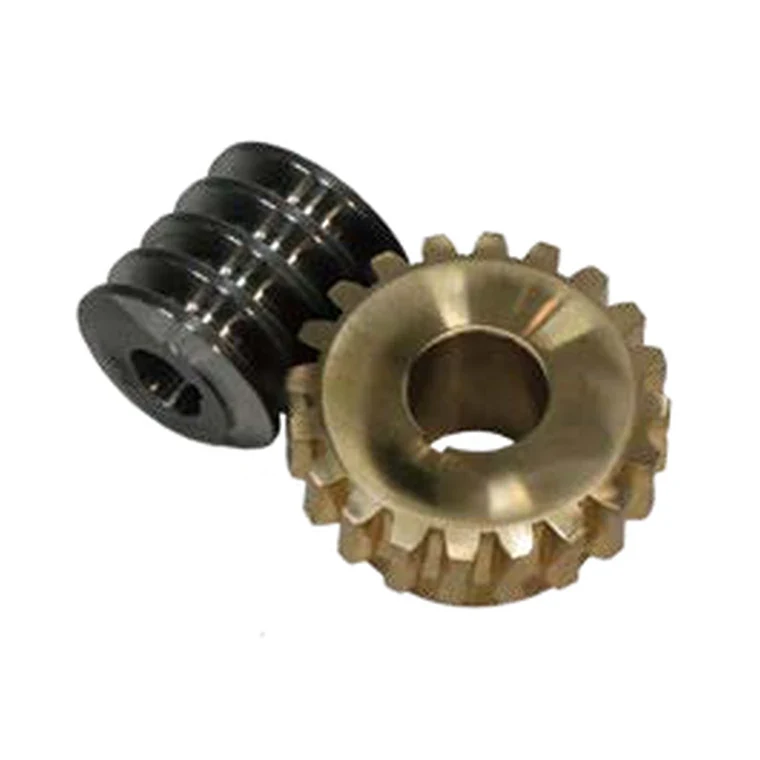
AuthorEver-power Custom Worm Gear Engineering Team
StatusHuman technical review required
PurposeRFQ preparation
Not a substituteApproved drawings and tests
Step 1
Define the transmission
- Ratio and tolerance
- Input/output orientation and center distance
- Speed, normal/peak torque, duty, reversals and shock
- Service-life and reliability target
Step 2
Define tooth and assembly data
- Worm starts, hand, pitch/module/DP, lead and profile
- Wheel teeth, face, throat and hub
- Pair backlash, contact and mounting condition
- Bearing journal, bore, face and runout datums
Step 3
Define materials and tribology
- Worm/wheel material pair
- Treatment, hardness and finish
- Lubricant, viscosity basis and delivery
- Temperature, contamination and cooling
Step 4
Define acceptance
- Controlled revision and deviations
- Material/treatment reports
- Tooth and dimensional report
- Backlash/contact at stated center distance
- Test and pair traceability
Request for quotation
Apply this checklist to your drawing
Share the drawing, quantity, material, heat treatment, accuracy requirement and application for RFQ review.